
As housing needs change as property values continue to rise across North Vancouver, homeowners are looking for ways to make better use of their land. One increasingly popular approach is building coach houses and laneway homes on their properties, which creates extra living space while making the most of an existing property.
In this article, you’ll learn why more people are choosing coach houses and laneway homes as a smart property investment in North Vancouver. We also cover the local guidelines for both the City and the District, discuss costs, and show you real examples of coach houses people have built.
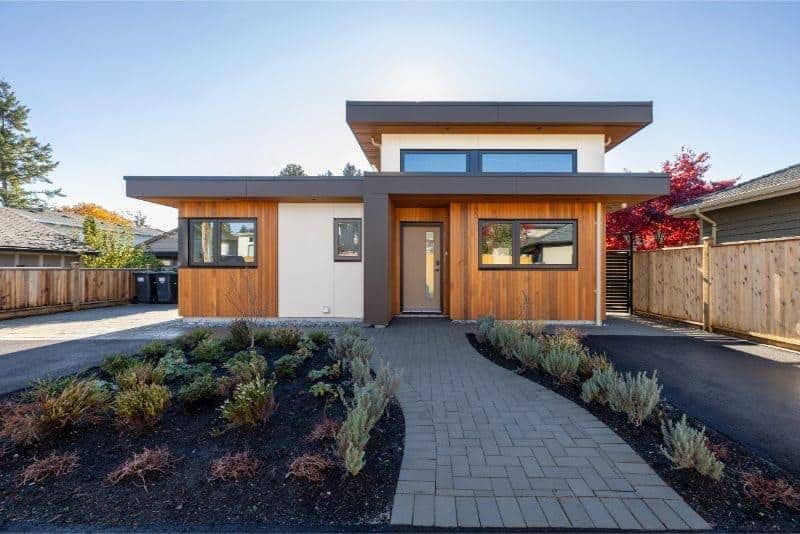
What is a Coach House and Why Does It Matter in North Vancouver?
A coach house is a small, self-contained home located on the same property as the main house. This type of accessory dwelling unit is a great way to add an extra living space to your land. A laneway home is similar, but it’s usually built along a lane or alley at the back of a lot. It’s a good option for people who don’t want to take up space in the main yard.
Coach houses matter in North Vancouver because they give homeowners options. People can use them to:
- Give kids their own space while staying close to the family
- Provide a home for parents or other family members
- Earn rental income from the extra unit
- Add value to the property
- Create a space that can change as the family’s needs change
Whatever the intended usage, coach houses are worth giving strong consideration.
Understanding North Vancouver’s Coach House Guidelines
The rules for building a coach house differ depending on where you live. The City of North Vancouver and the District of North Vancouver each have specific guidelines that outline what is allowed, including size, height, and parking requirements.
City of North Vancouver coach house guidelines
The City of North Vancouver has established requirements that you must follow carefully to build a compliant coach house.
- Coach houses are allowed on properties zoned for one-unit residential use, such as RS-1 and RS-2.
- The front lot line must be at least 10 metres (32.8 ft) wide to qualify.
- A coach house can be used by family members or as a rental, but it cannot be sold separately.
- The maximum floor area for a coach house
- is 92.9 m² (1,000 sq. ft.).
- Side setbacks must be at least 1.22 metres (4 ft).
- The coach house address must be clearly visible and lit from both the street and the lane.
- Two parking spaces are required on the property.
To get the thorough details and drawings, review the City of North Vancouver’s Coach House Information Handout before starting the design process. The Accessory Coach House Development Permit Guidelines provide deeper insight into site-specific issues like steep or hazardous slopes and heritage restrictions that may affect what you are permitted to build.

District of North Vancouver coach house guidelines
The District of North Vancouver provides the following regulations that you need to know and follow if you plan to build a coach house on your property.
- Coach houses are only allowed on single-family residential lots within the Urban Containment Boundary.
- Only one coach house is permitted per lot.
- Coach houses must be placed behind the main house.
- If your lot has lane access, the coach house must be at least 1.2 metres (4 ft) from the back of the property.
- The maximum floor area for a coach house is 90 m² (968 sq. ft.), allowing for a comfortable but modestly sized secondary home.
- Basements and rooftop decks are not allowed.
- Adding a coach house requires one extra parking space beyond the two required for the main house, for a total of three spaces.
For full details on the 30+ regulations the DNV has established for building coach houses, check their RSN Zoning Guide (Document 1268797). It offers more information on siting and setbacks, size and height, interior specs, amenities, parking and utilities, and more. You should also review the District’s how-to guide for building coach houses.

Why guidelines are only the starting point
Guidelines give you a clear idea of what each municipality allows. However, they don’t replace professional advice and can’t account for the unique details of your property.
This is where working with a designer becomes important. They can review the municipal rules, assess your specific lot, and translate those requirements into a layout that makes sense for how you plan to use the space. Bringing one early on makes your permit process smoother and can help you avoid future delays and hiccups.
Why Coach Houses Are a Smart Property Investment
Building a coach house isn’t just about adding living space on your property. It’s a strategic investment that offers the following benefits:
- Increase in property value: Adding a coach house can boost the property’s value by turning unused land into livable space. Properties with additional dwelling units can be used for housing families, rentals, and as home offices.
- Rental income potential: As housing demand increases across North Vancouver, a well-designed coach house can generate steady rental income. This regular price can help offset your mortgage or property taxes.
- Flexibility in changing markets: The best part about a coach house is its adaptability. As your needs and the market change, your coach house can evolve into a guest suite, living quarters, or rental unit.
The Cost of Building a Coach House in North Vancouver
In North Vancouver, coach houses typically start at $550,000. Factors that influence the final cost include:
- Size and overall square footage
- Quality of finishes and materials
- Site conditions, such as slope, access, and soil type
- Utility connections and servicing needs
- Labour costs
- Custom designs, if applicable
- Regulatory requirements, such as development permits, building permits, inspections, and fees
While $550,000 is quite a sum, homeowners see it as a long-term investment. Rental income could potentially generate thousands monthly and tens of thousands annually, helping recover your initial investment as your property’s value increases.
Real Coach House Projects Built by Goldcon Construction
At Goldcon Construction, we’ve had the privilege of bringing custom coach houses to life across North Vancouver. Here are three of our projects, each designed to meet zoning regulations while aligning with our client’s goals:
Tempe Crescent Coach House Project

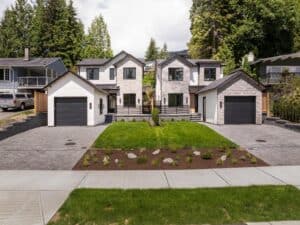
The Tempe Crescent Coach House was designed as a modern, compact home that makes smart use of the available space. The layout focuses on everyday livability, with good natural light and clear separation between living areas, making it well-suited for rental use or extended family living.
This coach house features:
- 1,000 sq. ft. laneway home
- Two bedrooms and two bathrooms
- Kitchen and main living space on the ground floor
- Dedicated laundry room on the upper level
- Crawlspace for additional storage
- Large outdoor patio for added living space
- Two-car driveway
Dollarton Coach House Project
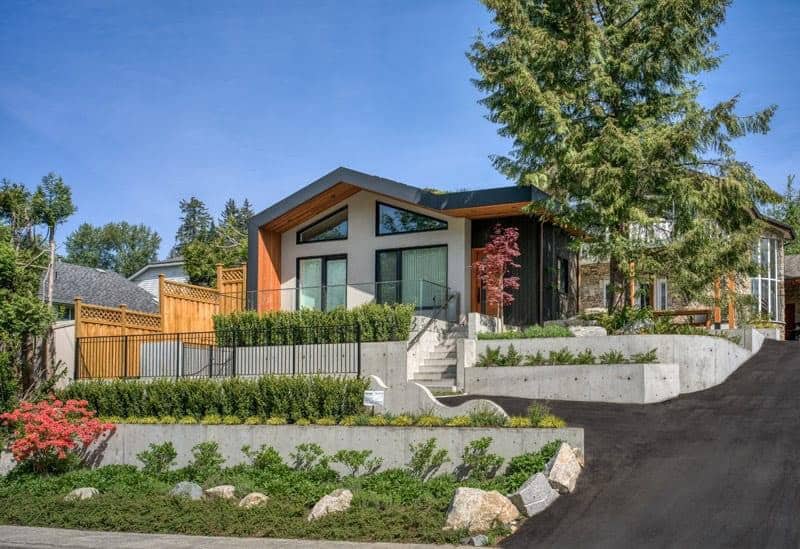
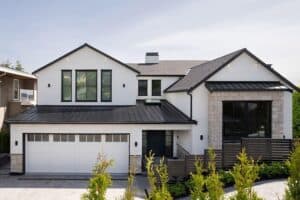
The Dollarton coach house is a two-bedroom, one-bathroom home in one of North Vancouver’s most desirable neighbourhoods. The layout makes the most of the available space, and the house includes modern amenities and finishes that reflect the style and character of the Dollarton area.
East 12th Street Coach House Project

The East 12th Street Coach House is a standalone home with the latest design and construction. Our team at Goldcon aligned with the homeowners’ goals, delivering a well-designed, modern house while fully complying with municipal regulations and site constraints. The project enhances the property’s long-term usability and overall resale value.
Choosing the Right Team for Your Coach House Project
Coach houses are significant investments that don’t fall under the category of standard buildings. Choosing a capable team that can navigate municipal approvals, zoning requirements, and the construction challenges in North Vancouver is vital.
Working with an experienced local builder like Goldcon Construction makes a difference.
- Local experience in North Vancouver: We’ve served in both the City and District of North Vancouver for over 25 years. During this period, we’ve grown deep roots and a thorough understanding of how to build coach houses.
- Navigating municipal approvals and construction: Obtaining development and building permits, along with inspections, can be hard to do on your own. Whether you’re dealing with challenging topography, climate, or approval processes, we have the experience to guide you through these processes efficiently.
- Clear communication and a versatile portfolio: Goldcon prioritizes consistent communication from planning to completion, keeping homeowners informed at every stage. Our rich portfolio shows our ability to adapt designs and layouts to different properties and goals.
Final Thoughts: Is a Coach House Right for Your Property?
Coach houses offer more than just extra space. In North Vancouver, they combine long-term investment value with real lifestyle flexibility. Whether your goal is rental income, housing for family members, or future-proofing your property, a well-planned coach house can help you make better use of your land while increasing its overall value.
If you’re considering a coach house, working with an experienced local builder like Goldcon Construction can help you move from idea to reality with fewer surprises. Our team understands North Vancouver’s guidelines and approval processes, and we’ll guide you through every stage, from early planning to final construction.
If you’d like to explore what’s possible on your property, contact us to discuss your coach house project and get expert guidance tailored to your lot and goals.
FAQs
What are the differences between a coach house and a laneway home?
They are usually used interchangeably in North Vancouver. The main difference is the location. Laneway homes are built along a lane or alley at the rear of the property, while coach houses are located within the same lot as a main house.
Can I build a coach house anywhere in North Vancouver?
No, eligibility depends on your zone, lot size, and location, whether in the City or District. Check with your municipality to confirm your property qualifies.
Where can I find official coach house guidelines for North Vancouver?
Visit the City of North Vancouver’s coach house permit page or the District of North Vancouver’s coach house guide for detailed requirements and processes.
How much does it cost to build a coach house in North Vancouver?
Most coach houses cost about $550,000, but the final costs depend on size, finishes, site conditions, and the service requirements.
Do I need a designer or architect to build a coach house?
Municipal guidelines are a good place to start. However, working with a designer or architect is highly recommended. They can assess your lot conditions, interpret zoning requirements, and create a design that maximizes space and guarantees compliance with regulations.