
If you own a single-family home in North Vancouver, you may be standing on more potential than you realize. Recent changes to British Columbia’s (BC) housing rules have significantly expanded what homeowners are allowed to build on their land.
The City of North Vancouver (CNV) has already implemented the zoning change, and the District is working toward its own set of modifications. This means a single lot can now (or potentially) support up to six units, depending on size and location. These additional homes can take the form of duplexes, triplexes, townhouses, or even additions to an existing building, without rezoning.
For North Vancouver homeowners, this unlocks massive development and rental potential. Whether you’re looking to make generational living easier, generate long-term income, or increase overall property value, BC’s multiplex zoning changes are worth understanding.
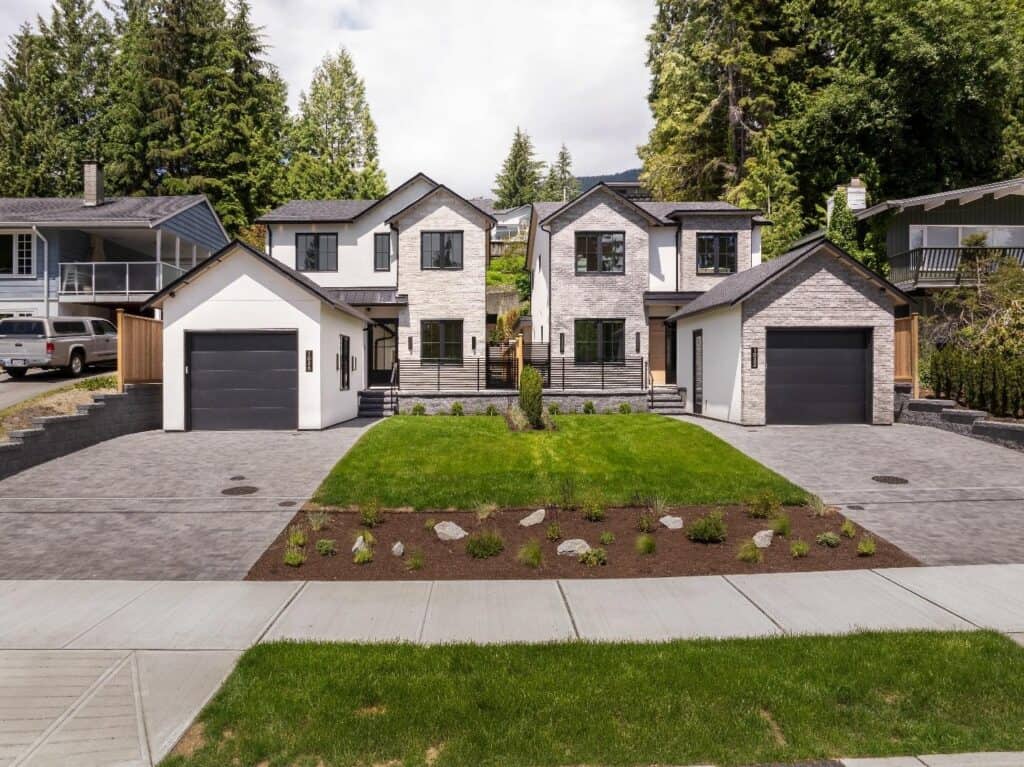
A Quick Overview of British Columbia’s Housing Legislation
“Multiplex zoning” basically means that on most single-family lots, homeowners can now develop small buildings with up to three, four, or six homes instead of just one house.
Over the past few years, the Province of British Columbia has passed new housing laws that changed what homeowners were allowed to build on their residential lots, with these two bills driving the most changes:
Bill 44
Bill 44 of the Housing Statutes (Residential Development) Amendment Act, passed in 2023, was the initial legislation that set things in motion. It required municipalities across BC to allow small-scale multi-unit housing (SSMUH) in zones previously limited to single-family homes.
Local governments had until June 30, 2024, to update their local rules and bylaws to allow duplexes, triplexes, and other multi-unit housing to align with provincial standards.
Some municipalities, including the City of North Vancouver, were quicker to comply than others. The District of North Vancouver (DNV), for example, interpreted the rules to mean that because they already permitted three units on a lot (a main home, a secondary suite, and a coach house) since June 2024, no further changes were needed.
Bill 25
Bill 25 of the Housing and Municipal Affairs Statutes Amendment Act, passed in late 2025, closed that gap. It made it clear that a suite and coach house didn’t meet the new density requirements. Municipalities like the DNV have until June 30, 2026, to permit additional forms of small-scale, ground-oriented housing, including houseplexes, to meet SSMUH requirements.
This means, in most cases, single-family residential properties in BC can build up to three to four housing units as standard. If your lot happens to be in close proximity to a frequent transit corridor, that number could go as high as six units.
Small-Scale Multi-Unit Housing: Explained
Small-scale multi-unit housing covers a wide range of ground-oriented (GO) housing forms that fit within existing neighbourhoods. These aren’t apartment buildings; they’re low-rise structures (typically three-storey, including basements) that maintain a residential feel while accommodating more homes on a single lot.
Here’s what falls under the SSMUH umbrella:
- Secondary suite: A self-contained unit within a house (often a basement suite).
- Coach houses: A detached unit at the back of a property, usually facing a lane.
- Duplexes: Two primary units, arranged side-by-side (or stacked), each with its own entrance.
- Triplexes: Three primary units in various configurations (typically look like a large house).
- Fourplexes: Four primary units up to three storeys (including basement).
- Townhouse/houseplex: Small clusters of attached, low-rise units (typically in a row).
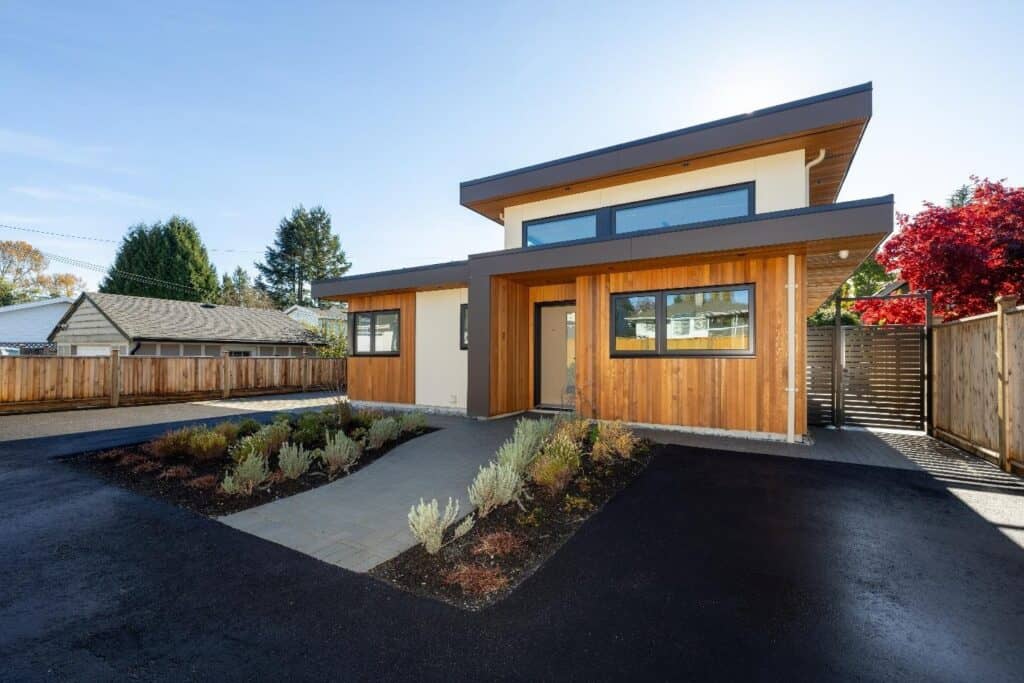
Under BC’s SSMUH rule, a “dwelling unit” counts as one self-contained home, or in simpler terms, if someone could live there independently. A dwelling unit generally has:
- A private kitchen
- A private bathroom
- A sleeping area/bedroom
- Its own lockable entrance
For instance, a duplex (two units) with one basement suite each (two units) would make up four dwelling units. If your lot size is capped to three units, this wouldn’t be allowed.
What the City of North Vancouver Has Already Done
The CNV’s Ground Oriented (GO) Housing Zone bylaws (Amendment Bylaw No. 9137) have replaced traditional single-family zoning across much of the city. This zoning, now officially in effect, permits up to four units on more than 4,000 properties, allowing homeowners to build low-rise buildings instead of a single house. However, the buildings still have to look and feel like part of the existing neighbourhood.
Here’s a quick breakdown:
| Lot type | Maximum units | Details |
| Small (Under 280 m²/~3,014 sq. ft) | Up to 3 units | Limited density in smaller areas |
| Standard(Over 280 m² in “Low Rise Neighbourhood 1”) | Up to 4 units | Most residential areas in the city |
| Transit(Over 280 m² in “Low Rise Neighbourhood 2”) | Up to 6 units | Applies to lots near frequent transit corridors like the R2 Marine Dr and 240 Lynn Valley routes |
The GO Zone permits a range of housing forms: new single-detached homes with or without secondary suites and coach houses, new duplexes with or without secondary suites, multiplexes and townhomes up to four or six units, depending on location, and additions or renovations to existing buildings.
The “finer print” worth knowing includes:
- FSR (Floor Space Ratio): Capped at 0.85 for standard lots and 1.0 for transit lots.
- Heights: Generally limited to three storeys (around 10-12 metres/32.81- 39.37 feet).
- Parking: Set at 0.5 spaces per unit, so a fourplex needs two parking spots.
- Lot coverage: Scales from 30% (for 1 unit) up to 45% (for 5-6 units).
If your property is located within the GO Zone, you must complete an application for the following:
- New construction
- Interior or exterior renovations, including adding a secondary suite or converting a suite into a duplex
- Existing building additions
- Subdivision
- Stratification
Where the District of North Vancouver Stands
The DNV is taking a more measured approach. Since June 2024, the District has already allowed up to three units on a single-family lot within the urban containment boundary: a main dwelling, a secondary suite, and a coach house.
With Bill 25 now in effect, here is what’s being proposed:
- Many lots will be permitted to build up to four homes
- Lots near specific frequent transit corridors may be permitted up to six homes
- Smaller lots (<280m²) will remain limited to three homes
The District is developing a new Residential Houseplex Zone (R3) as part of its current Zoning Bylaw Rewrite project. Draft regulations for 4-unit SSMUHs (which are subject to change at this point) include:
- A maximum FSR of 0.7 to 1.0, depending on lot size and unit count
- Minimum setback of three metres (10 feet) at the front, 1.2 metres (4 feet) on the sides and 1.5-3 metres (5-10 feet) at the rear
- A maximum of three storeys (including partial basements)
- Maximum building coverage of 40-50%, depending on lot size
- Minimum off-street parking areas ranging from two to four spaces, depending on unit count
The following lots have been exempt from the Province of BC’s SSMUH requirements:
- Lands with certain heritage designations
- Large lots (>4,050m²)
- Lands within designated Transit-Oriented Areas
- Lands not connected to municipal water or sewer systems
- Lands subject to hazardous conditions
- Lands outside the Urban Containment Boundary
Roughly 7,000 residential District lots are located in natural hazard areas near steep slopes, forests, and creeks. The District is considering whether to also apply hazard-related exemptions to these lots based on wildfire and flooding risks.
On 12 March 2026, the District applied to the Province for a time extension on 319 single-family properties surrounding the Marine Drive corridor to permit SSMUH. This extension, if granted, would push the SSMUH compliance deadline to December 31, 2030, for those specific properties.
The idea is to preserve the corridor for higher-density, transit-oriented development once the planned Metrotown-North Shore Bus Rapid Transit (BRT) service is in place.
Why Duplexes in North Vancouver Hit the Sweet Spot
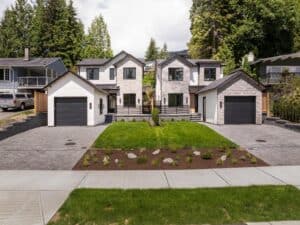
You could technically build a fourplex or even a sixplex on your lot. But for many North Vancouver homeowners, we think the side-by-side duplex with a secondary suite in each unit offers the best bang for your buck in terms of value, practicality, and neighbourhood fit.
Here’s the thinking behind it:
Two-for-one living
A side-by-side duplex on a standard single-family lot gives you two complete homes, each with its own entrance and sense of privacy. Adding a legal secondary suite in each creates four units on one lot, hitting the maximum density allowed in most residential areas without building anything that looks or feels like an apartment building.
More affordable living
You could live on one side and rent out the other, creating additional income streams that help offset your mortgage or property taxes.
Alternatively, you could build one side for your family and the other for aging parents or adult children, giving you multi-generational living without sacrificing anyone’s independence. With Canada’s high housing costs, this kind of setup makes generational living way more affordable and practical.
Quality construction
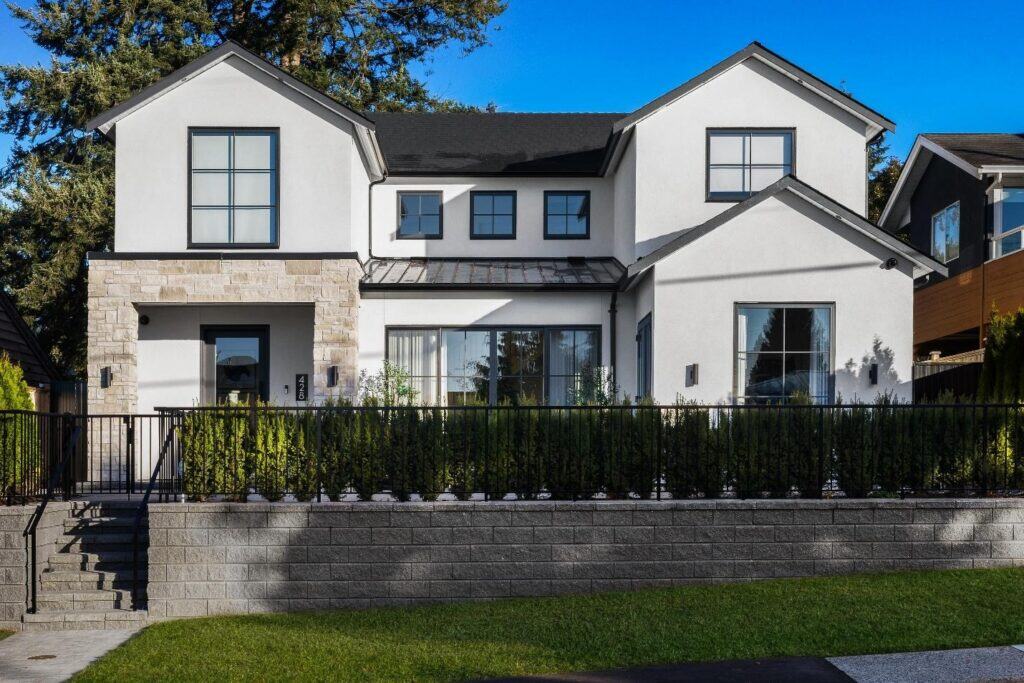
From a home building viewpoint, a duplex with suites is more straightforward to build than a triplex or fourplex. The design and approval process is simpler and faster, the parking demands are manageable, and on top of everything, it’s much more cost-effective.
That said, every lot is different. The right approach depends on your property’s size and zoning restrictions. A triplex or fourplex might make more sense on certain lots, especially larger ones or those near transit corridors. The key is getting professional advice early, so you understand what’s possible before making a decision.
What The New Multiplex Zoning in BC Means for Property Values
The new multiplex zoning rules in BC don’t automatically turn every single-family home into a development site, but they do change how property value is calculated, especially in places like North Vancouver.
Traditionally, the value of a single-home lot was based mostly on the house itself: its size, conditions, and recent comparable sales. With the new small-scale multi-unit housing (SSMUH) zoning, the land now plays a much bigger role. When a site can support three, four, or even six homes instead of one, buyers begin to think about what could be built there, not just what already exists.
This shift also brings new types of buyers into the market. Aside from traditional homeowners, properties with multiplex potential may appeal to small developers, multi-generational families, and buyers looking to offset costs with rental income. That added demand doesn’t mean every home will jump in price overnight, but it may support stronger values over time, particularly for well-located lots.
However, it’s worth keeping expectations realistic. Construction costs in North Vancouver remain high, and the conservative FSR caps mean that not every lot will make financial sense for a developer today.
The redevelopment of these lots is expected to happen gradually over many years, not all at once. But the underlying land value is now supported by this increased potential, and that’s something every homeowner should factor into their long-term plans.
How to Get Started
Here’s a practical starting point if you’re considering building a custom home, duplex, or multiplex under the new BC zoning rules in North Vancouver:
Properties in the City of North Vancouver (CNV)
Check whether your lot falls within Low Rise Neighbourhood 1 (up to four units) or Low Rise Neighbourhood 2 (up to six units) by reviewing the City’s Growing Liveable Neighbourhoods map.
Properties in the District of North Vancouver (DNV)
The new Residential Houseplex Zone (R3) regulations are still being finalized. Keep an eye on the District’s provincial housing legislation page (dnv.org) for updates to stay informed about what’s being proposed for your neighbourhood.
For both
Contact an established construction company early. Qualified builders, like Goldcon Construction, can assess your lot conditions, review the applicable municipal guidelines, and help you understand which multiplex unit makes the most practical and financial sense for your situation.
The Bottom Line
The new multiplex zoning in BC has opened the door to real development and rental potential in North Vancouver. Homeowners are no longer limited to a single-family house, and can now consider custom homes, duplexes, or other small-scale multi-unit housing options that better align with their budget and long-term plans.
Whether you’re looking to build your perfect home, create rental income, or accommodate aging parents or adult children in the City or District of North Vancouver, Goldcon Construction can help you understand what’s possible on your lot and guide you through the process from start to finish.
FAQs
How many units can I build on my single-family lot in the City of North Vancouver?
In the City of North Vancouver, most standard lots (over 280 m²) can accommodate up to four units, or up to six if located near transit corridors like the R2.
What’s the difference between a duplex and a multiplex?
A duplex refers to two primary dwelling units on a single lot, typically arranged side-by-side or stacked. A multiplex is a broader term that includes triplexes (three units), fourplexes (four units), and larger configurations.
Can I add a secondary suite to a duplex in North Vancouver?
Yes! Under the City of North Vancouver’s Ground Oriented Zone, duplexes can include a secondary suite, which effectively creates four units on a single lot.
Do I need a building permit for multiplex construction in Canada?
Yes, all new construction (including duplexes and fourplexes) requires building permits in Canada.